
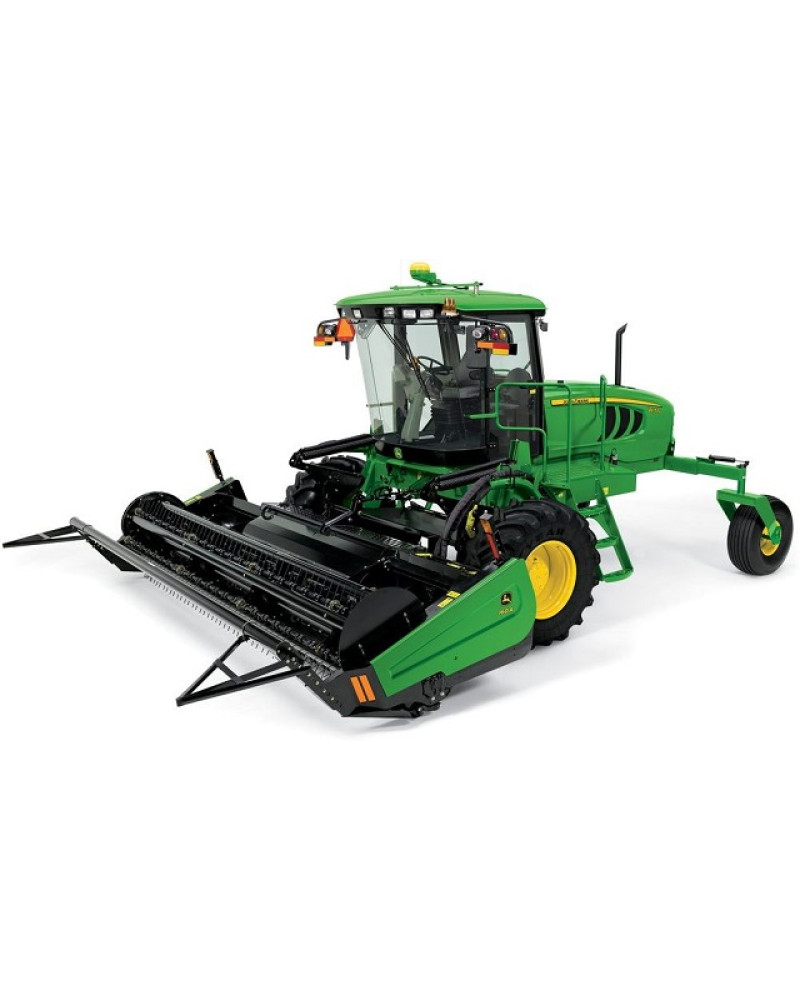
$15.00
Models
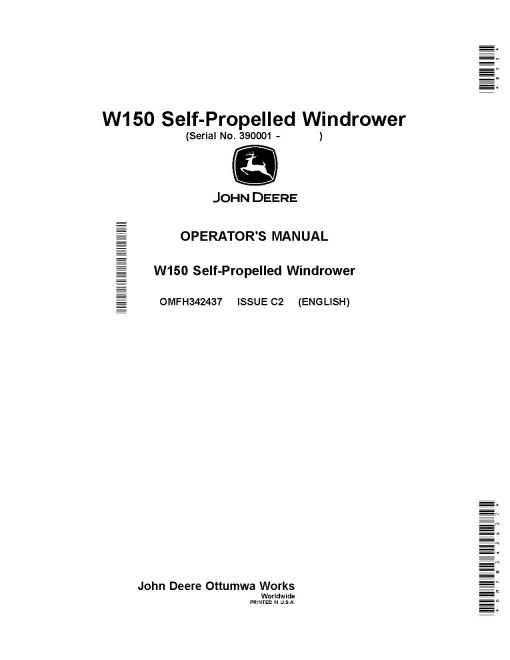
W150Document Type
Operators ManualLanguage
EnglishType of Equipment
Self-Propelled WindrowerIllustrated factory Operators Manual for John Deere Self-Propelled Windrowers Models W150.
This manual will assist you in operating, and maintaining for your self-propelled windrower.
You can use a Windows, Mac, or Android device to view this manual. You only need to have a PDF reader installed.
Covered Models:
W150 (SN: 390001-490049)
Format: PDF, 248 pages
Language: English
Publication Date: 01 Jan 2022
Table of Contents:
Introduction
Foreword
Safety
Before Operating
Recognize Safety Information
Understand Signal Words
Replace Safety Signs
Follow Safety Instructions
Prevent Machine Runaway
Use Seat Belts
Freeing a Mired Machine
Park Windrower Safely
Keep Riders Off Machine
Ballast for Safe Ground Contact
Stay Clear of Platform
Stay Clear of Rotating Driveline
Handle Fuel Safely - Avoid Fires
Prepare for Emergencies
Handle Starting Fluid Safely
Do Not Open High-Pressure Fuel System
Wear Protective Clothing
Use Safety Lights and Devices
Transport Windrower with Platform or Weight Box Attached
Practice Safe Maintenance
Remove Accumulated Crop Debris
Support Machine Properly
Remove Paint Before Welding or Heating
Welding Near Electronic Control Units
Avoid Heating Near Pressurized Fluid Lines
Avoid High-Pressure Fluids
Service Accumulator Systems Safely
Use Proper Tools
Handling Battery Safely
Service Cooling System Safely
Handle Electronic Components and Brackets Safely
Store Attachments Safely
Decommissioning - Proper Recycling and Disposal of Fluids and Components
Practice Safe Service Procedures
Component Identification
Components
Safety Sign Location
Replace Safety Signs
Cab Door, Left-Hand Side
Cab, Right-Hand Side
Drive Wheels, Both Sides
Frame Rail, Left-Hand Side
Lift Arm Cylinder Stops, Both Sides
Hydraulic Pressure
Engine Compartment
Batteries
Cab Interior Post, Left-Hand Side
Cab Interior Post, Lower Left-Hand Side
Frame, Under Cab
Platform Steps, Left-Hand Side
Storage Compartment
Emergency Exit
Operating Symbols, Terms and Definitions
Operating Symbols
Operating Definitions and Terms
Controls and Instruments
Operators Station Entrance
Operators Station Emergency Exit
Header Controls
Ignition Switch and Horn
Ground Drive and Engine Speed Controls
Platform Drive Switch
Ground Speed Lever Platform Controls
Deck Shift Draper Platform Option
Platform Float Pressure Adjust
Windrow Merger Attachment or Swath Roller Switch
Windrow Merger Attachment Draper Speed - If Equipped
Cab Display Module
Engine Warning Lights
Cab Display Module Select Switch
Voltage Display
Engine Warning Lights
Cab Temperature Controls
Wiper Controls
Air Louver Adjustment
Turn Signals
Steering Column Adjustment
Manual Storage
Master Disconnect Switch
Power Supply
Operators Seat Adjustment
Training Seat
Checking Operator Presence System
Seat Belts
Configuring Double Windrow Attachment Controls
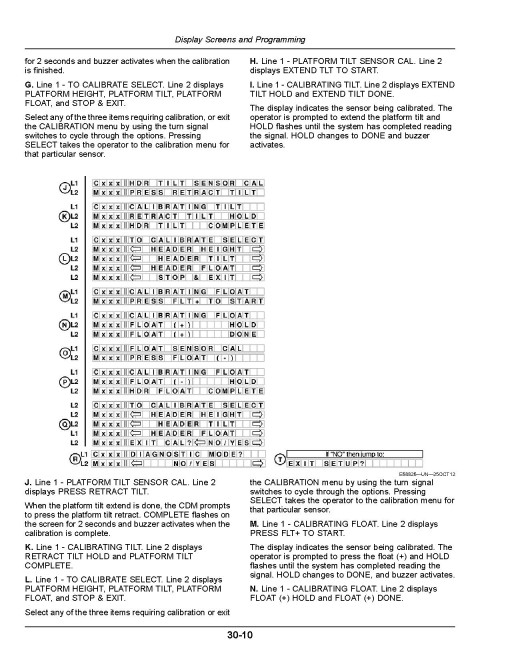
Display Screens and Programming
Programming Cab Display Module (CDM)
Operating Information Screens
Windrower Setup Menu
Control Locks
Cab Display Setup
Calibrate Sensors
Diagnostic Mode
Enable - Disable Sensors
Sensor Input
Activate Functions
Force Header Type
Operating Screens
Calibrate Swath Compressor Sensor (If Equipped)
Warning and Alarm Screens
Lights and Signals
Worklights, Road Lights, and Flood Lights
Cab Interior Lights
Turn Signals
Hazard Lights
Beacon Lights
Break-In
Machine Break-In Service
After One Hour of Operation
After Five Hours of Operation
After 10 Hours of Operation
After 50 Hours of Operation
Initial Engine Oil and Filter Change
Operating Engine
Starting Procedure After Extended Shutdown or Oil Change
Checking Warning Lights
Engine Warm-Up Period
Starting the Engine
After Engine Starts
Stopping Engine
Battery
Hot-Weather Operation
Attach and Detach Platform
Attach Platform
Double Windrow Attachment
Operating Windrower
Cab-Forward Operation
Reverse in Cab-Forward Operation
Engine-Forward Operation
Reverse in Engine-Forward Operation
Spin Turn
Stopping
Adjust Caster Tread Width
Platform Flotation and Adjustment
Transporting on Roadway
Speed Limit Decal
Towing Platform with Windrower
Field to Transport
Transport to Field Conversion
Reversing Platform
Parking Windrower
Towing Windrower
Swath Compressor (if equipped)
Auger Speed
Reel Speed
Adjusting Reel Speed
Adjusting Reel Speed without Indexing
Knife Speeds
Disc Speed
Fuels, Coolants, and Lubricants
Filling Fuel Tank
Diesel Fuel Storage
Heavy Duty Diesel Engine Coolant
Supplemental Coolant Additives
Additional Information About Diesel Engine Coolants and John Deere COOL-GARD II Coolant Extender
Testing Diesel Engine Coolant
Drain Intervals for Diesel Engine Coolant
Oilscan and CoolScan
Multipurpose Extreme Pressure (EP) Grease
Lubricants
Fluids
Capacities
Lubricant Storage
Alternative and Synthetic Lubricants
Lubrication and Maintenance
Required Emission-Related Information
Perform Lubrication and Maintenance
Observe Lubrication Symbols
Service Interval Display
Use Proper Tools
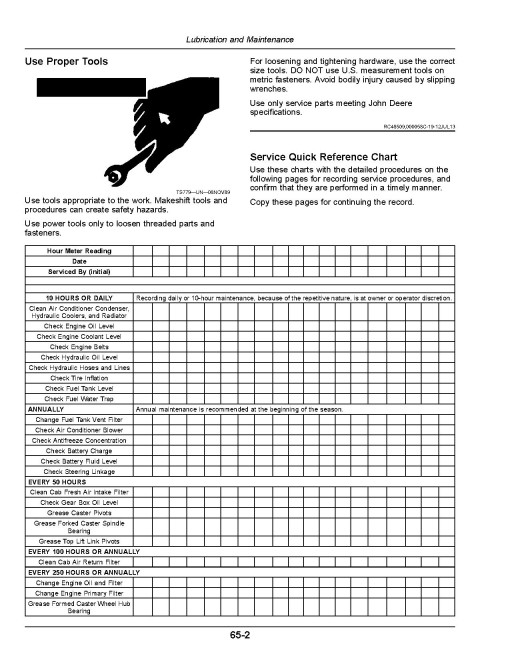
Service Quick Reference Chart
Work In Ventilated Area
Use Proper Lifting Equipment
Annual Service
HVAC Blower
Air Conditioner Evaporator Service
Coolant Concentration
Battery Charge
Battery Fluid Level
Steering Linkage
Fuel Tank Vent Filter
Every 10 Hour Service
Check Tire Inflation
Check Engine Oil Level
Check Engine Coolant
Check Engine Belts
Cooler Service And Cleaning
Checking Hydraulic Oil Level
Draining Water from Primary Fuel Filter
Every 50 Hour Service
50 Hour Grease Fittings
Cab Fresh Air Intake Filter
Check Gear Case Oil Level
Every 100 Hour Service
Clean Cab Air Return Filter
Inspect Cab Suspension Limit Straps
Every 250 Hour or Each Season Service
Engine Air Filter Service
Engine Oil and Filter Change
Formed Caster Wheel Bearing Grease
Final Drive Oil Check
Wheel Nut Torque
Every 500 Hour or Each Season Service
Engine Oil and Filter Change
Bleeding Fuel System
Change Fuel Filters
Gear Case Oil Change
Replace Hydraulic Oil Filters
Safety Systems
Every 1000 Hours
Drain and Replace Final Drive Oil
Every 1500 Hours
Hydraulic Oil Change
Every 2000 Hours or Bi-Annually
General Inspection
Flush Cooling System
5000 Hours or Bi-Annually
Light Adjustment and Maintenance
Engine
Engine Compartment Door
Cleaning Engine Compartment
Engine Component Identification
Maintenance Platforms
Fueling
Shutting Off Fuel Supply
Draining Fuel Tank
Do Not Modify Fuel System
Fill Coolant Tank
Winterizing Cooling System
Inspect or Replace Thermostat
Check Engine Belts - Replace as Required
Inspect Cooling Fan Belt Tensioner
Inspect and Clean Crankcase Breather Tube
Inspecting Exhaust System
Engine Oil Pressure
Electrical System
Batteries
Fuses, Circuit Breakers, and Relays
Fuse, Circuit Breaker, and Relay Decal
System Main Fuse
Electrical Connector Handling
Basic Electrical Component Handling / Precautions for Vehicles Equipped with Computer Controlled Systems
Alternator and Voltage Regulator
Replacing Bulbs
Dome Light Replacement
Preventing Battery Explosions
Preventing Acid Burns
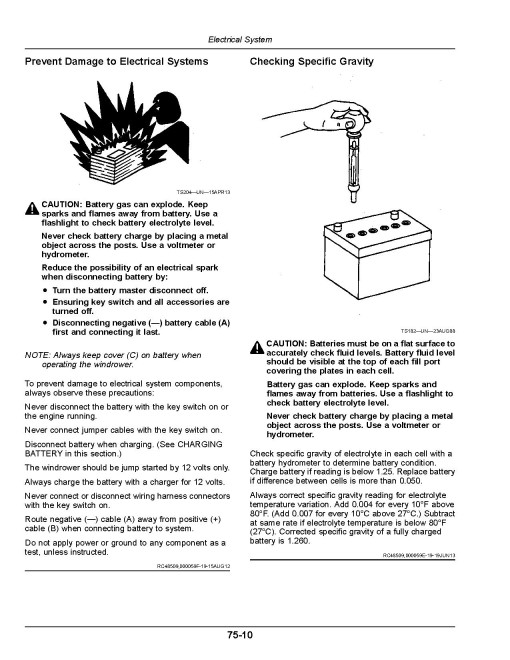
Prevent Damage to Electrical Systems
Checking Specific Gravity
Connecting Battery Cables
Charging Battery
Connect Booster Battery
Battery Replacement
Hydraulic System
Hydraulic System
Platform Drop Rate
Hydraulic System Cleanliness
Hydraulic Fittings
Wheels, Tires, and Rear Axle
Service Tires Safely
Tire Inflation Pressures
Checking Wheels
Adjust Caster Tread Width
Ballast
Drive Wheel Removal and Installation
Changing Formed Caster Wheel
Changing Forked Caster Wheel
Caster Wheel Dampeners
Options and Attachments
Options and Attachments
Troubleshooting
Engine Error Codes
Cab Display Module and Windrower Control Module Fault Codes
Engine
Air Conditioning
Heater
Drive System
Lift and Float System
Electrical
Power Screen Cleaner (Rear Door Air Screen)
Steering and Ground Speed Controls
Throttle
Tires
Internal Park Brakes
Seat
Radio
Storage
Storing Windrower (End of Season)
Removing Windrower From Storage (Beginning of Season)
Specifications
Windrower Specifications
Dimensions
Windrower Dimensions
Lubricants, Fluids, and System Capacities
Unified Inch Bolt and Screw Torque Values
Metric Bolt and Screw Torque Values
Limited Battery Warranty
All Engines United States and Canada Industrial (Off-Highway) Coverage
All Engines International Industrial, (Off-Highway) Coverage
California Emission Control System Warranty, Off-Highway
Speed Limit Decal - If Required
Identification Numbers
Record Product Identification Numbers
Record Windrower Product Identification Number
Record Engine Serial Number
Platform Identification Number
Keep Proof of Ownership
Keep Machines Secure
Index
This manual will assist you in operating, and maintaining for your self-propelled windrower.
You can use a Windows, Mac, or Android device to view this manual. You only need to have a PDF reader installed.
Covered Models:
W150 (SN: 390001-490049)
Format: PDF, 248 pages
Language: English
Publication Date: 01 Jan 2022
Table of Contents:
Introduction
Foreword
Safety
Before Operating
Recognize Safety Information
Understand Signal Words
Replace Safety Signs
Follow Safety Instructions
Prevent Machine Runaway
Use Seat Belts
Freeing a Mired Machine
Park Windrower Safely
Keep Riders Off Machine
Ballast for Safe Ground Contact
Stay Clear of Platform
Stay Clear of Rotating Driveline
Handle Fuel Safely - Avoid Fires
Prepare for Emergencies
Handle Starting Fluid Safely
Do Not Open High-Pressure Fuel System
Wear Protective Clothing
Use Safety Lights and Devices
Transport Windrower with Platform or Weight Box Attached
Practice Safe Maintenance
Remove Accumulated Crop Debris
Support Machine Properly
Remove Paint Before Welding or Heating
Welding Near Electronic Control Units
Avoid Heating Near Pressurized Fluid Lines
Avoid High-Pressure Fluids
Service Accumulator Systems Safely
Use Proper Tools
Handling Battery Safely
Service Cooling System Safely
Handle Electronic Components and Brackets Safely
Store Attachments Safely
Decommissioning - Proper Recycling and Disposal of Fluids and Components
Practice Safe Service Procedures
Component Identification
Components
Safety Sign Location
Replace Safety Signs
Cab Door, Left-Hand Side
Cab, Right-Hand Side
Drive Wheels, Both Sides
Frame Rail, Left-Hand Side
Lift Arm Cylinder Stops, Both Sides
Hydraulic Pressure
Engine Compartment
Batteries
Cab Interior Post, Left-Hand Side
Cab Interior Post, Lower Left-Hand Side
Frame, Under Cab
Platform Steps, Left-Hand Side
Storage Compartment
Emergency Exit
Operating Symbols, Terms and Definitions
Operating Symbols
Operating Definitions and Terms
Controls and Instruments
Operators Station Entrance
Operators Station Emergency Exit
Header Controls
Ignition Switch and Horn
Ground Drive and Engine Speed Controls
Platform Drive Switch
Ground Speed Lever Platform Controls
Deck Shift Draper Platform Option
Platform Float Pressure Adjust
Windrow Merger Attachment or Swath Roller Switch
Windrow Merger Attachment Draper Speed - If Equipped
Cab Display Module
Engine Warning Lights
Cab Display Module Select Switch
Voltage Display
Engine Warning Lights
Cab Temperature Controls
Wiper Controls
Air Louver Adjustment
Turn Signals
Steering Column Adjustment
Manual Storage
Master Disconnect Switch
Power Supply
Operators Seat Adjustment
Training Seat
Checking Operator Presence System
Seat Belts
Configuring Double Windrow Attachment Controls
Display Screens and Programming
Programming Cab Display Module (CDM)
Operating Information Screens
Windrower Setup Menu
Control Locks
Cab Display Setup
Calibrate Sensors
Diagnostic Mode
Enable - Disable Sensors
Sensor Input
Activate Functions
Force Header Type
Operating Screens
Calibrate Swath Compressor Sensor (If Equipped)
Warning and Alarm Screens
Lights and Signals
Worklights, Road Lights, and Flood Lights
Cab Interior Lights
Turn Signals
Hazard Lights
Beacon Lights
Break-In
Machine Break-In Service
After One Hour of Operation
After Five Hours of Operation
After 10 Hours of Operation
After 50 Hours of Operation
Initial Engine Oil and Filter Change
Operating Engine
Starting Procedure After Extended Shutdown or Oil Change
Checking Warning Lights
Engine Warm-Up Period
Starting the Engine
After Engine Starts
Stopping Engine
Battery
Hot-Weather Operation
Attach and Detach Platform
Attach Platform
Double Windrow Attachment
Operating Windrower
Cab-Forward Operation
Reverse in Cab-Forward Operation
Engine-Forward Operation
Reverse in Engine-Forward Operation
Spin Turn
Stopping
Adjust Caster Tread Width
Platform Flotation and Adjustment
Transporting on Roadway
Speed Limit Decal
Towing Platform with Windrower
Field to Transport
Transport to Field Conversion
Reversing Platform
Parking Windrower
Towing Windrower
Swath Compressor (if equipped)
Auger Speed
Reel Speed
Adjusting Reel Speed
Adjusting Reel Speed without Indexing
Knife Speeds
Disc Speed
Fuels, Coolants, and Lubricants
Filling Fuel Tank
Diesel Fuel Storage
Heavy Duty Diesel Engine Coolant
Supplemental Coolant Additives
Additional Information About Diesel Engine Coolants and John Deere COOL-GARD II Coolant Extender
Testing Diesel Engine Coolant
Drain Intervals for Diesel Engine Coolant
Oilscan and CoolScan
Multipurpose Extreme Pressure (EP) Grease
Lubricants
Fluids
Capacities
Lubricant Storage
Alternative and Synthetic Lubricants
Lubrication and Maintenance
Required Emission-Related Information
Perform Lubrication and Maintenance
Observe Lubrication Symbols
Service Interval Display
Use Proper Tools
Service Quick Reference Chart
Work In Ventilated Area
Use Proper Lifting Equipment
Annual Service
HVAC Blower
Air Conditioner Evaporator Service
Coolant Concentration
Battery Charge
Battery Fluid Level
Steering Linkage
Fuel Tank Vent Filter
Every 10 Hour Service
Check Tire Inflation
Check Engine Oil Level
Check Engine Coolant
Check Engine Belts
Cooler Service And Cleaning
Checking Hydraulic Oil Level
Draining Water from Primary Fuel Filter
Every 50 Hour Service
50 Hour Grease Fittings
Cab Fresh Air Intake Filter
Check Gear Case Oil Level
Every 100 Hour Service
Clean Cab Air Return Filter
Inspect Cab Suspension Limit Straps
Every 250 Hour or Each Season Service
Engine Air Filter Service
Engine Oil and Filter Change
Formed Caster Wheel Bearing Grease
Final Drive Oil Check
Wheel Nut Torque
Every 500 Hour or Each Season Service
Engine Oil and Filter Change
Bleeding Fuel System
Change Fuel Filters
Gear Case Oil Change
Replace Hydraulic Oil Filters
Safety Systems
Every 1000 Hours
Drain and Replace Final Drive Oil
Every 1500 Hours
Hydraulic Oil Change
Every 2000 Hours or Bi-Annually
General Inspection
Flush Cooling System
5000 Hours or Bi-Annually
Light Adjustment and Maintenance
Engine
Engine Compartment Door
Cleaning Engine Compartment
Engine Component Identification
Maintenance Platforms
Fueling
Shutting Off Fuel Supply
Draining Fuel Tank
Do Not Modify Fuel System
Fill Coolant Tank
Winterizing Cooling System
Inspect or Replace Thermostat
Check Engine Belts - Replace as Required
Inspect Cooling Fan Belt Tensioner
Inspect and Clean Crankcase Breather Tube
Inspecting Exhaust System
Engine Oil Pressure
Electrical System
Batteries
Fuses, Circuit Breakers, and Relays
Fuse, Circuit Breaker, and Relay Decal
System Main Fuse
Electrical Connector Handling
Basic Electrical Component Handling / Precautions for Vehicles Equipped with Computer Controlled Systems
Alternator and Voltage Regulator
Replacing Bulbs
Dome Light Replacement
Preventing Battery Explosions
Preventing Acid Burns
Prevent Damage to Electrical Systems
Checking Specific Gravity
Connecting Battery Cables
Charging Battery
Connect Booster Battery
Battery Replacement
Hydraulic System
Hydraulic System
Platform Drop Rate
Hydraulic System Cleanliness
Hydraulic Fittings
Wheels, Tires, and Rear Axle
Service Tires Safely
Tire Inflation Pressures
Checking Wheels
Adjust Caster Tread Width
Ballast
Drive Wheel Removal and Installation
Changing Formed Caster Wheel
Changing Forked Caster Wheel
Caster Wheel Dampeners
Options and Attachments
Options and Attachments
Troubleshooting
Engine Error Codes
Cab Display Module and Windrower Control Module Fault Codes
Engine
Air Conditioning
Heater
Drive System
Lift and Float System
Electrical
Power Screen Cleaner (Rear Door Air Screen)
Steering and Ground Speed Controls
Throttle
Tires
Internal Park Brakes
Seat
Radio
Storage
Storing Windrower (End of Season)
Removing Windrower From Storage (Beginning of Season)
Specifications
Windrower Specifications
Dimensions
Windrower Dimensions
Lubricants, Fluids, and System Capacities
Unified Inch Bolt and Screw Torque Values
Metric Bolt and Screw Torque Values
Limited Battery Warranty
All Engines United States and Canada Industrial (Off-Highway) Coverage
All Engines International Industrial, (Off-Highway) Coverage
California Emission Control System Warranty, Off-Highway
Speed Limit Decal - If Required
Identification Numbers
Record Product Identification Numbers
Record Windrower Product Identification Number
Record Engine Serial Number
Platform Identification Number
Keep Proof of Ownership
Keep Machines Secure
Index
General
Models
W150Document Type
Operators ManualLanguage
EnglishType of Equipment
Self-Propelled WindrowerReviews: 0
There are no reviews for this product.
Questions: 0
No questions about this product.
Similar Products
W150 Self-Propelled Windrowers (SN: 490050 - 511099) Operators Manual (OMFH350664)
OMFH350664
Models: W150
Document Type: Operators Manual
Language: English
Type of Equipment: Self-Propelled Windrower
$15.00
W150 Self-Propelled Windrowers (SN: from 511100) Operators Manual (OMFH357334)
OMFH357334
Models: W150
Document Type: Operators Manual
Language: English
Type of Equipment: Self-Propelled Windrower
$15.00
W155 Self-Propelled Windrowers (North America) Operators Manual (OMFH342422)
OMFH342422
Models: W155
Document Type: Operators Manual
Region: North America
Language: English
Type of Equipment: Self-Propelled Windrower
$15.00
W155 Self-Propelled Windrowers (North America) Operators Manual (OMFH349957)
OMFH349957
Models: W155
Document Type: Operators Manual
Region: North America
Language: English
Type of Equipment: Self-Propelled Windrower
$15.00
W170 Self-Propelled Windrowers (SN: up to 490000) (North America) Operators Manual (OMFH342482)
OMFH342482
Models: W170
Document Type: Operators Manual
Region: North America
Language: English
Type of Equipment: Self-Propelled Windrower
$15.00